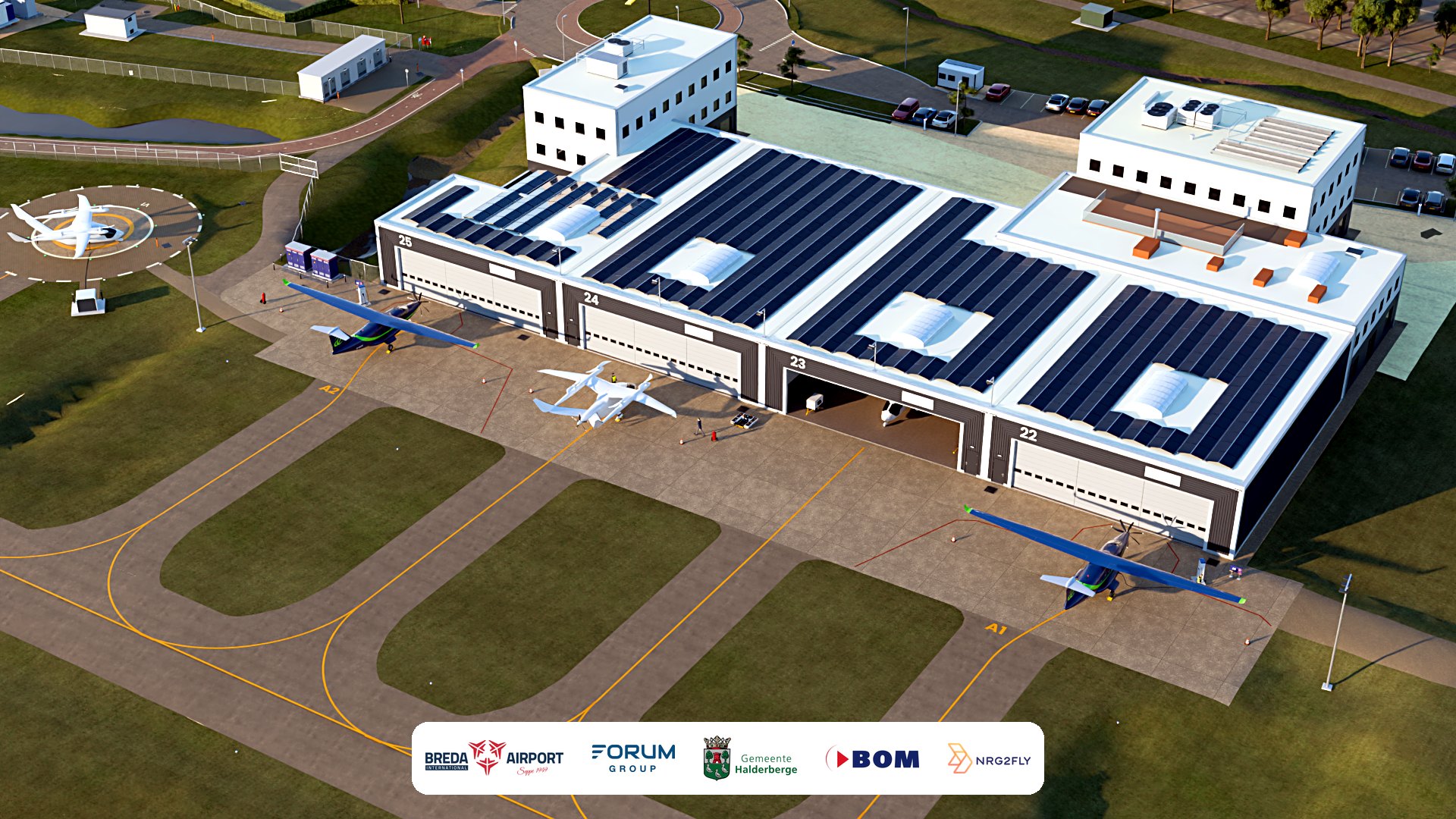
Bosschenhoofd, 26 October 2026 – Commissioned by the Municipality of Halderberge and the Brabant Development Agency (BOM), NRG2fly is investigating how Breda International Airport in Bosschenhoofd can be assured of sufficient electricity in the future. The study also looks at whether and how charging facilities could be created at the airport for electric aircraft, cars and trucks.
The ambition of Breda International Airport
In its Masterplan 2049, Breda International Airport sets out its ambition to grow step by step in electric aviation: from electric training aircraft to, in time, electric aircraft for passengers and cargo. Flight school Breda Aviation already trains pilots on an electric training aircraft and brings that hands-on experience to the study. Electric aviation requires charging facilities. The study should make clear what is needed and what is possible.
One approach to charging aircraft and road traffic
NRG2fly is exploring the options for charging facilities with two functions:
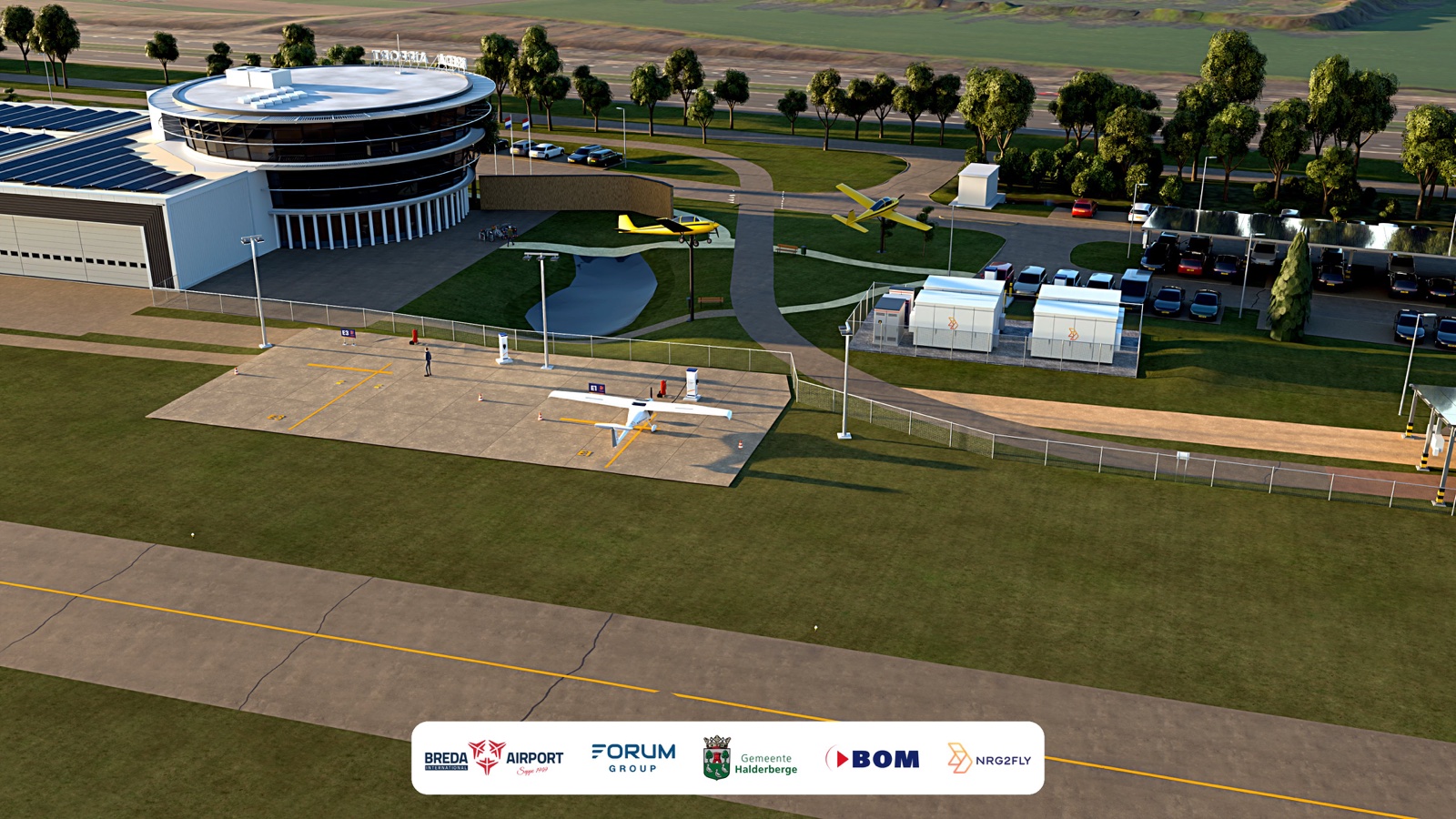
- For aircraft: charging points for electric aircraft at the airfield, starting with today's training aircraft and possibly expanding later for larger aircraft.
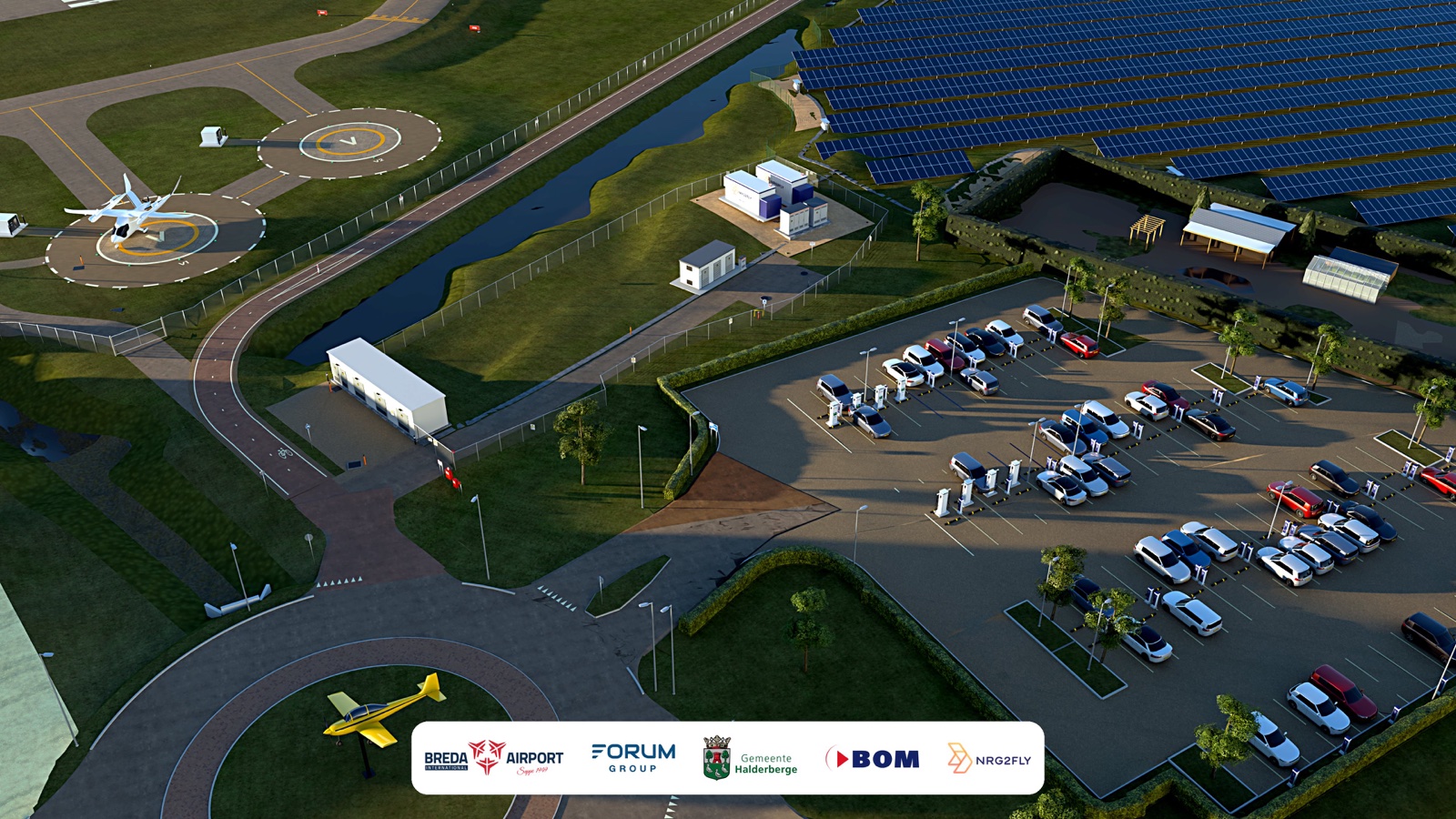
- For road traffic: a public fast-charging station for cars and trucks outside the secure area of the airport, where visitors, businesses and transport companies from the surrounding area could also charge.
The study examines whether a joint approach for both functions helps to make better use of the facilities and to make an investment viable.
The municipality's role: energy and grid capacity
The electricity grid in the region is congested in many places. As a result, new businesses, homes and facilities cannot always be connected straight away. The Municipality of Halderberge is therefore mainly involved in the part of the study that looks at the energy supply and the available grid capacity in the area around the airport. Together with BOM, the municipality has asked NRG2fly to look beyond the airport itself. The study consists of three parts:
- Grid capacity: how the airport and the surrounding area can be supplied with sufficient electricity, for example with batteries that temporarily store power and with locally generated solar energy. This is being done in consultation with grid operator Enexis.
- Future energy demand: how much electricity the airport, possible charging facilities and new businesses in the area may need in 2030 and 2035.
- Financing and management: which forms of investment and management would fit, should the parties later decide to build charging facilities.
What does this mean for the surrounding area?
The study maps how the airport's energy demand relates to that of residents and businesses in Halderberge. It provides more insight into future energy demand and into the options for making the best possible use of the available grid capacity in the area. It also considers whether a public fast-charging station could benefit residents, visitors and businesses from the surrounding area. The actual effects will have to emerge from the study.
Next steps
NRG2fly expects to deliver the results of the study in the coming months. Based on these, each of the parties involved will decide whether and how to take further steps. No decision has yet been made on any charging facilities.
Quotes
“In our Masterplan 2049 we have set out our ambition to grow in electric aviation. To do that, we need to know exactly what is required in terms of power and charging facilities. This study helps us answer those questions carefully, together with partners who know both aviation and the energy sector.”
Jan Voeten, Director, Breda International Airport
“At BOM, we are happy to contribute to research into sustainable innovations such as electric aviation. We are curious to see what this study reveals about combining charging for aviation and road traffic, and about making smart use of the available grid capacity.”
Sjoerd Zeijlemaker, Developer Climate-Neutral Energy Solutions, BOM
“Grid capacity is an important issue for Halderberge, for residents, businesses and the airport. This study gives us better insight into energy demand in the area around the airport and into the opportunities that exist. That knowledge will help us make well-founded choices later on.”
Pepijn van Aken, Alderman for Economy and Sustainability, Municipality of Halderberge
“In the future, airports can play an important role in the energy supply of their surroundings. In this study we are mapping what it takes to charge both aircraft and vehicles, and what that requires of the electricity grid. We contribute our experience in aviation and charging infrastructure.”
Merlijn van Vliet, CEO NRG2fly
Impressions
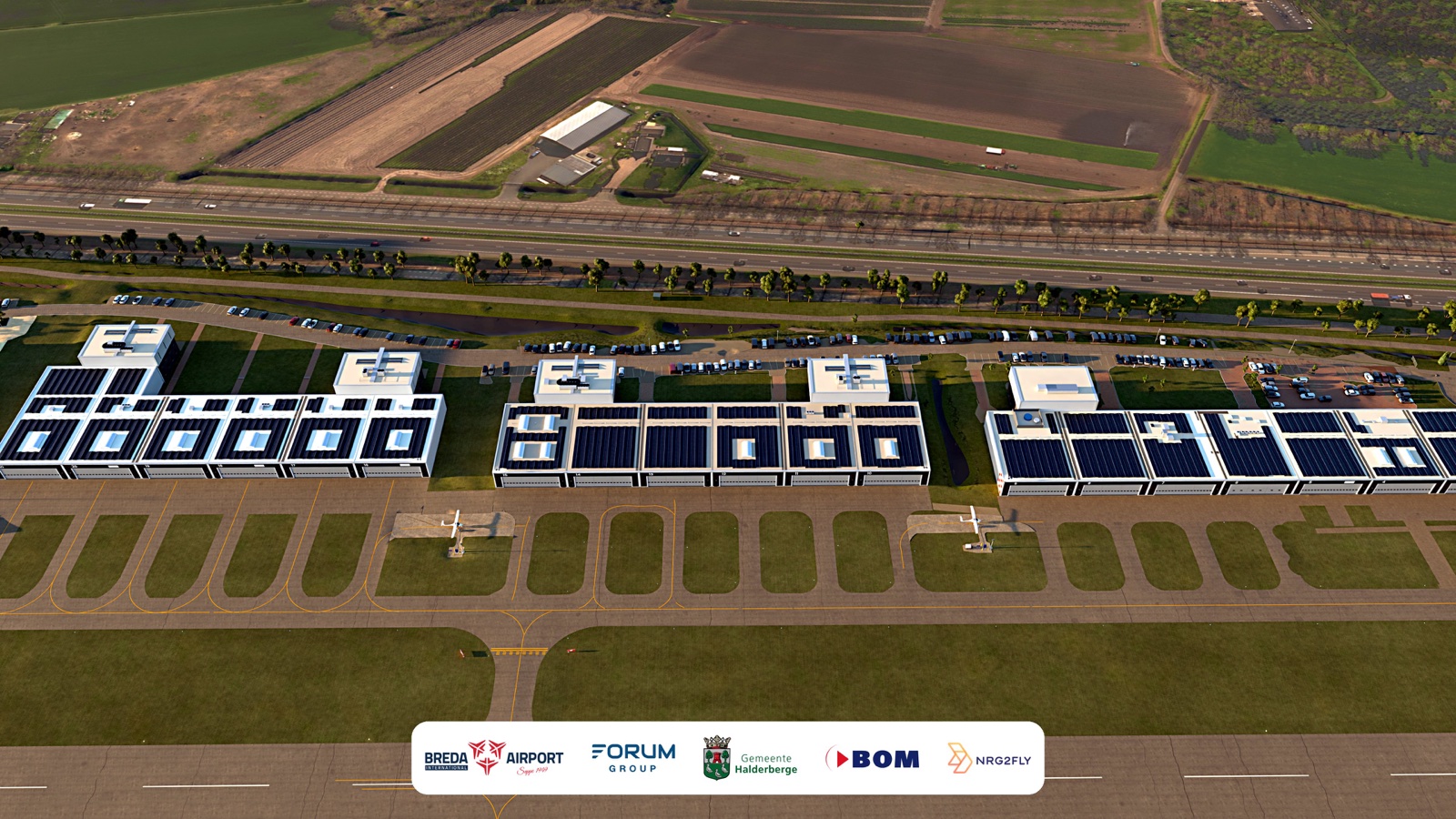
Visualisations illustrating what is being explored in the study. No decision has yet been made on construction or design.
High-resolution press images are available on request via merlijn@nrg2fly.com.